WWOOFing or housing in exchange for services: differences and what to choose?
As rental prices continue to rise and more people seek authentic ways of living, alternative housing solutions are gaining popularity. Among them, WWOOFing and housing in exchange for services are increasingly attracting people looking for both human and economic experiences.
However, these two options are often confused. In reality, they serve very different purposes: duration, structure, goals, and level of commitment. Understanding their differences is essential to make the right choice.
In this article, discover the key differences between WWOOFing and housing in exchange for services, and which solution best fits your situation.
What is WWOOFing?
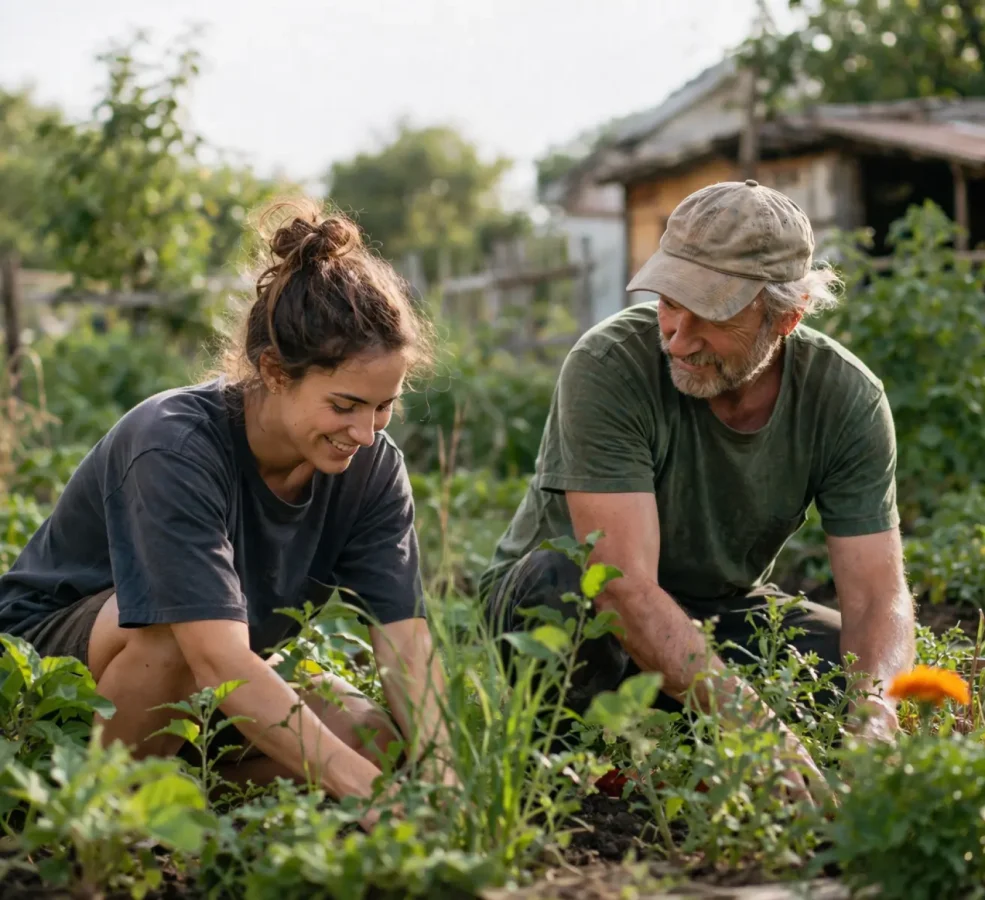
WWOOFing (World Wide Opportunities on Organic Farms) is a volunteer-based exchange system on organic farms. In return for a few hours of work per day, you receive accommodation and meals.
- Farm work (gardening, harvesting, maintenance)
- Usually short-term stays (a few days to a few weeks)
- Rural and eco-focused environment
- No financial compensation
WWOOFing is primarily an immersive experience, often chosen to travel differently, discover organic farming, or live a short-term human adventure.
What is housing in exchange for services?
Housing in exchange for services is based on an agreement between a host and a guest: accommodation is provided in return for everyday help.
This includes:
- Various services (companionship, elderly support, childcare, small tasks)
- Flexible duration (several months or more)
- Urban or rural settings
- A relationship based on trust and mutual support
This solution allows you to significantly reduce your housing costs while benefiting from a stable living environment.
To better understand how it works, visit how housing in exchange for services works.
Main differences between WWOOFing and housing in exchange for services
1. Purpose and lifestyle
WWOOFing is mainly about discovery and experience. It is designed for people who want to travel differently, live close to nature, or explore an eco-friendly lifestyle for a limited time.
On the other hand, housing in exchange for services meets a practical and everyday need: finding affordable and stable accommodation. It fits into real-life situations such as studying, working, or transitioning between life stages.
2. Duration and stability
Duration is one of the key differences:
- WWOOFing: short stays (a few days to a few weeks)
- Housing exchange: longer commitments (several months or more)
Housing in exchange for services provides essential stability for organizing your daily life (work, studies, personal life), unlike WWOOFing which remains temporary.
3. Type of tasks involved
The type of work differs significantly:
- WWOOFing: physical farm work (planting, harvesting, maintenance)
- Housing exchange: everyday support adapted to domestic life
In housing exchange, tasks are generally more diverse and accessible:
- Providing a reassuring presence (especially for seniors)
- Childcare
- Help with shopping or household tasks
- Small occasional services
This is therefore based on daily mutual support rather than intensive physical work.
4. Living environment
WWOOFing takes place almost exclusively in rural areas, often on isolated farms. This involves a specific lifestyle, sometimes far from amenities such as transport, shops, or connectivity.
Housing in exchange for services is much more flexible and can take place:
- In cities (ideal for students and young professionals)
- In suburban areas
- In the countryside
It is therefore easier to combine with an active lifestyle.
5. Structure, safety and commitment
Housing in exchange for services is generally more structured:
- Clear expectations defined in advance
- Agreements between both parties
- Possibility to formalize the arrangement
WWOOFing is usually more informal, with conditions varying greatly from one farm to another, requiring more flexibility and adaptation.
To secure your experience, you can read the safety guide.
6. Human relationship
In WWOOFing, relationships are often friendly but temporary, depending on the place and duration of the stay.
In housing exchange, the human relationship is central. It develops over time and can become a true cohabitation based on trust.
In some cases, it is part of intergenerational living, with strong human benefits.
7. Compatibility with work or studies
WWOOFing requires significant availability and daily physical involvement, making it difficult to combine with full-time work or studies.
Housing in exchange for services is designed to fit into your daily life:
- Flexible schedules
- Services adapted to your availability
- Balance between personal life and commitment
It is therefore a much more realistic long-term solution.
Which option should you choose?
WWOOFing is ideal if you:
- Want to travel on a low budget
- Are looking for a short and immersive experience
- Are interested in farming and ecology
Housing in exchange for services is more suitable if you:
- Need affordable and stable accommodation
- Want to build a lasting human relationship
- Need a solution compatible with your studies or work
A sustainable and human housing solution
Housing in exchange for services is now a practical response to the housing crisis. Accessible, flexible, and based on mutual support, it meets real needs while creating meaningful social connections.
Whether you are a student, a young professional, or in transition, you can find a suitable solution by registering on the platform.